
"BIO-BRICK: From Waste to Worth. Shaping the Future of Eco-Construction."
UAE-Founded
Circular Economy
B2B Construction
Net Zero 2050 Aligned
LEED & Estidama Compatible
scroll down
Dubai Municipality (2010); Stonehaven (2024)

Source: Development of Novel Construction Material from Food Waste (2021); Institute of Industrial Science, University of Tokyo
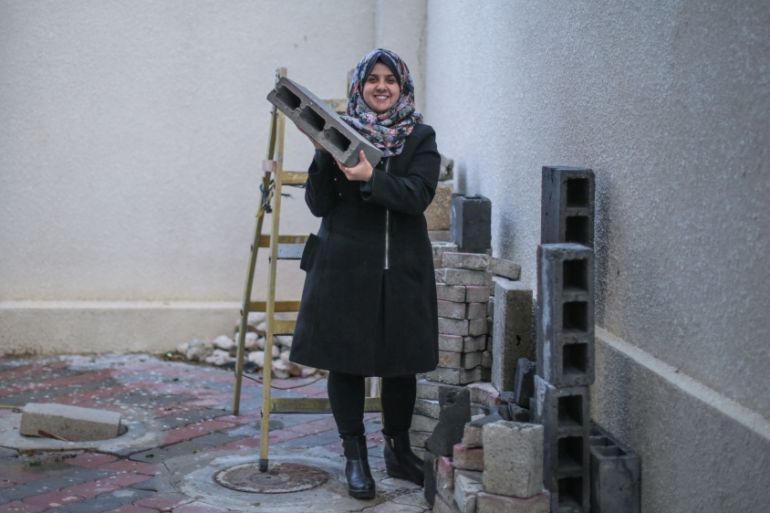
Source: Al Jazeera, "Rebuilding Gaza from its Ashes" (Mersiha Gadzo, 2017)

Source: TRT World, "Building Hope from Rubble"
UAE baked goods retail market estimated at $966.7M by 2027. Sources: RentechDigital (2026); Agriculture & Agri-Food Canada Sector Trend Analysis
*Frontiers in Built Environment (2025) — xanthan gum-stabilized rammed earth, 221% strength improvement over unstabilized baseline. Lower W/m·K = better insulator. Sources: ResearchGate (2025) comparative bio-brick studies.
| Material | Price (AED/unit) | Strength (MPa) | Lifespan | Use Case | Green Cert. | Production Energy |
|---|---|---|---|---|---|---|
| Hollow cement block | 2.35–2.77 | ~3.5 | 30–50 yrs | Non-structural | No | High |
| Solid cement brick | 3.40–3.82 | 15–50 | 50–100 yrs | Structural | No | High |
| Fired clay brick | 3.50–5.50 | 18–22 | 500+ yrs | Structural | No | Very High (1,000°C) |
| RE-BLOCK Bio-Brick | 2.80–3.20 | 2.5–4* | 25–40 yrs | Partition only | LEED/Estidama | 10–15× less |
Sources: Arab Iron & Steel Union (2024); FEPY UAE block pricing (2026); Nakkeeran & Krishnaraj (2024); IMARC Group (2026). Net-zero raw material cost + investor capital funds the first 5 months of operations before breakeven.
A gas or electric kiln capable of firing bricks at 1,000°C is typically the single largest cost in a conventional brick plant. Because RE-BLOCK bricks are cold/low-heat pressed, that cost disappears from our CapEx entirely — this is the structural reason our equipment bill is smaller, not a rough estimate. Sources: RE-BLOCK (2025); Lontto UAE (2023).
Likelihood → / Impact ↑